
CHAPTER 21. Science & Statistics
Hold My Hand: A Journey Back to Life

If you missed the previous chapters of Hold My Hand: A Journey Back to Life then you click here to find them all - Hold My Hand - The Book. Want to know more about me? Oops! I forgot to introduce myself…
As always - thank you for reading or listening!
necrotizing fasciitis (noun)
: a severe soft tissue infection that is caused by bacteria (such as Group A streptococci or MRSA) and is marked by oedema and necrosis of subcutaneous tissues with involvement of adjacent fascia and by painful red swollen skin over affected areas
Merriam-Webster Dictionary
It’s time to talk science. Not only is NF rare, but it’s hard to generalize as there’s such wide variation in terms of how the illness presents itself and how it progresses, making every patients journey unique. No two cases are the same. A minor case contained quickly, can involve nothing more than a tiny spot on a fingertip. But a more significant case, that takes longer to be correctly diagnosed, can spread quickly through an entire limb or large sections of the body and kill in a matter of hours.
There are a multitude of common misconceptions about NF.
Healthy people don’t get it – they do.
You must have an obvious open wound for the bacteria to get in – you don’t.
These bacteria eat your flesh – close, but no cigar on that one either.
You only get it if you have poor personal hygiene – no, we don’t need to inflict that stigma on NF patients as it’s also not true.
NF is contagious like the flu – also not true.
And sensationalist news headlines and storylines in fictional medical dramas have also contributed to the confusion.
As you read this chapter, please remember that I’m not a medical doctor, but I am educated as a scientist and researcher. This chapter contains my personal interpretation of the scientific research papers and information that I have tracked down on NF over the past couple of years.
I’ve done my best to make this as easy to read and understand as possible and included references to the sources for important data. You’ll also find links to some additional sources of information on NF at the end of Chapter 23.
WHAT IS NF?
Taken literally ‘necrotizing’ means the death of some sort of tissue in your body and ‘fasciitis’ refers to an inflammation of the fascia - the tissue under our skin that surrounds muscles, nerves, fat, and blood vessels. Though the term NF was only coined in the 1950’s it is believed that the same disease was mentioned more than 2,000 years ago by Hippocrates.
NF is one of a group of life-threatening bacterial infections called necrotizing soft tissue infections (NSTIs) which involve the necrosis of fat under the skin (subcutaneous fat), fascia, or muscle. NF can affect any area of the body from your head to your feet (1). No part of the body is safe – except maybe your teeth and bones!
NSTIs like NF are the most serious and potentially life-threatening of all skin and soft tissue infections. Without prompt diagnosis and aggressive treatment NF will in most cases ultimately kill (2). It’s estimated that between 15 and 35% of patients will die even if diagnosed and treated (3).
Your chances of survival are diminished the longer it takes to correctly diagnose what’s wrong with you and the longer it takes for them to get you into the operating theatre. That surgery involves a technique called debridement – a process whereby they cut away the dead, damaged and infected tissue to try and stop the infection spreading further.
If you’re already in septic shock and your blood pressure has tanked (as it had in my case) before that first surgery your chances of survival drop even further.
The time people spend in hospital because of NF can range widely - from a couple of days for a milder case up to many months for more serious cases (2). But just like everything in the NF world it also depends on how fit and healthy you were before the infection, how you react to treatment, and a host of other factors. Once again there is no ‘norm’ when it comes to NF.
WHAT CAUSES NF?
NF is the result of an infection by several different kinds of bacteria. In each case it may be caused by a single type of bacteria or may involve multiple types (referred to as poly-microbial).
Bacteria are small single-celled organisms that are not only found all around us in the environment, but that also flourish both on and within our bodies. It’s estimated that our bodies may contain more bacterial cells than human cells (4).
In most instances these bacteria live happily on the outside of our bodies, or even in our mouth or throat, and never cause a problem – even the ones that cause horrible infections like NF. Nobody really understands why they suddenly (occasionally) turn deadly.
When things go wrong the bacteria have most frequently entered the human body via some kind of break in the skin. That break may be large and obvious or in some cases it may be almost impossible to see with the naked eye. It could be a cut or a scrape, a graze, a burn, an insect bite, a puncture of some kind (like an injection site or the prick of a thorn on a rose bush), a spot or a boil, or a surgical wound.
They can also enter via any small injury that could have occurred during daily life or even during childbirth. People can also get NF after blunt trauma - an injury that doesn’t even break the skin. And in many cases, like mine, there’s no obvious way that the bacteria found their way into the body. Yet somehow, they did.
The bacteria that most commonly causes NF are group A streptococcus (GAS or ‘Strep A’). In my case it was both Streptococcus pyogenes and also a bacteria from another group called Staphylococcus epidermis.
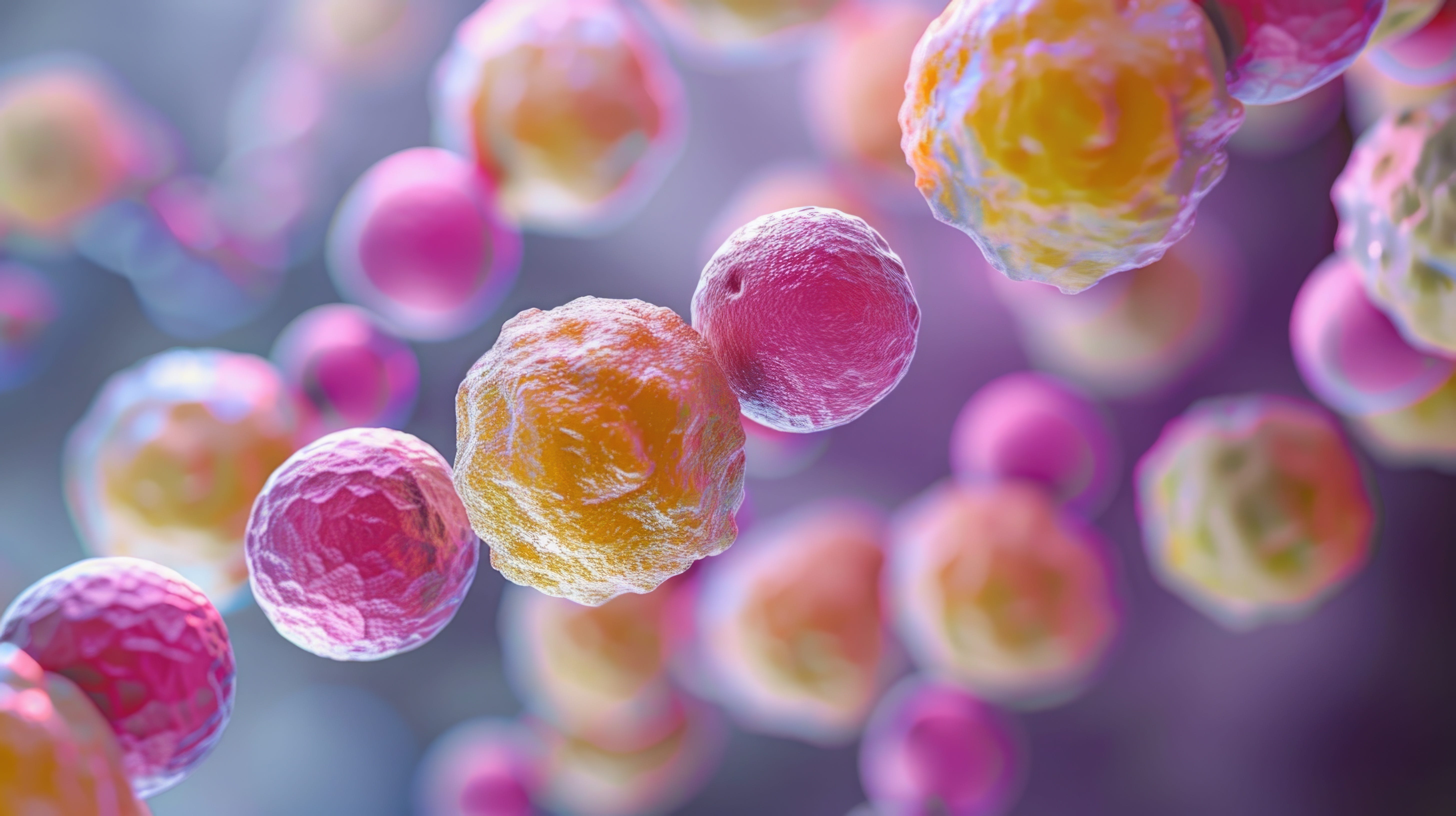
Image caption: a visual representation of the bacteria known as Streptococcus pyogenes. Credit - Adobe Stock.
GAS contains over a hundred sub-types of bacteria - commonly carried around in our noses, throats, and on our skin with no ill effects. However, they can also cause a range of diseases such as ‘strep throat’ (pharyngitis) and more serious conditions such as scarlet fever, of which there were epidemics in the 19th and early 20th century in many European countries that resulted in a large number of deaths (5).
Although NF is sometimes referred to as “flesh eating bacteria” or a “flesh-eating disease”, the bacteria(s) that cause it don’t literally chomp away on your flesh. In fact, the bacteria produce toxins that damage the blood supply to the fascia and as a result the tissue dies. However, GAS bacteria do also produce enzymes which also digest or dissolve the tissue.
Once the blood supply to the affected area is damaged it prevents i.v. antibiotics reaching it. So, the only solution to stop the infection spreading further is surgery to cut away the affected tissue – in this case the fascia.
HOW MANY PEOPLE GET NF?
NF may be classified as ‘rare’ yet it kills an estimated 150,000 people globally each year and leaves thousands with life changing consequences (6). The numbers likely underestimate the scale of the problem due to under-reporting and misdiagnosis.
The number of NF cases varies around the world - from as little as 4 cases per million people per year to over 150 cases per million (3,7). There is remarkable consistency in rates seen in industrialized countries (such as Australia, UK, USA, Canada, Denmark, Sweden, Netherlands, and Finland) with rates between 20 and 40 cases per million per year (5).
Here in Denmark, it has been estimated that there are around 120 cases per year in our little population of just around 6,000,000 people (8). Even though we have a well-functioning public health system, this horrible infection will take the lives of 20% of patients in the first few days and up to 30% within a year of the infection (8). The number of cases is many times higher in countries with less advanced healthcare and there up to half of the NF patients will die.
NF infections decreased during the COVID-19 pandemic (9). However, not only have they rebounded to higher than pre-pandemic levels - in Denmark and other countries such as the US, Canada, UK and France – but data suggests that overall, the number of these infections has been trending upwards for some years (8). In addition, there have been periodic spikes in these infections in industrialized countries from the 1980s onwards (5).
Recent increases in cases are thought to be related to microbial virulence i.e. the bacteria are getting better at damaging our bodies and they are becoming more resistant to the antibiotics that we have available to treat these infections (3).
Right around the time that I got sick in late 2022 alarm bells started to ring, not only in Denmark, but also in other countries like the UK and US as the result of a dramatic increase in ‘strep A’ cases.
NF hit the news in early March 2023 as there had been 35 deaths in Denmark from December 2022 to February 2023. A major jump in both incidence (the number of people infected) and number of deaths (10). By July 2023 the number of deaths attributed to NF was already 76 – drastically higher than anything that has been seen previously (11).
ARE SOME PEOPLE MORE AT RISK OF GETTING NF?
The simple answer is yes, but I can’t find any evidence that I was one of them. Fit and healthy people with no known risk factors get it too. I say ‘known’ as there is a suspicion that some may people have a kind of genetic susceptibility to these infections by GAS bacteria. Genetic differences between people could perhaps explain why some of us develop a potentially fatal infection, while others, infected by the same type of bacteria, experience nothing more than an irritating sore throat (12).
Around 75% of people who get NF have other health problems (so-called co-morbidities) that may lower their body’s ability to fight infections and so put them at higher risk of NF (8). Most frequently that seems to be diabetes and obesity (around 40%), vascular disease (around 30%), and in some instances previously undiagnosed cases of cancer (around 20%) (8,13). But one in four NF patients are like me and don’t have any other co-morbidities (8).
There is also evidence to suggest that some other diseases, such as influenza, may also affect our bodies in such a way that we are more at risk of infections such as NF (5).
HOW DO YOU KNOW IF YOU (OR SOMEONE ELSE) HAVE NF?
As I’ve said, probably too many times by now, every NF patient’s story is unique. That relates not only to which part of the body is affected, but also to how the body reacts to the infection, and the symptoms that they experience as they first become aware that something is wrong with them.
My first symptom was vomiting and an unexplained (but not yet excruciating) pain in my groin – right in that crease where your leg joins your body. Eighteen hours later when the diarrhea started, the pain had become intolerable (even after multiple doses of morphine), and I was showing signs of sepsis. Less than twenty-four hours after my symptoms started my blood pressure was dangerously low, and I was going into septic shock. It was only then that my leg started to swell and go red - hinting at something going on in that area of my body.
Diagnosing NF early and acting quickly is critical yet misdiagnosis is common. Many doctors will never see a NF case so it’s not the first disease that would jump to mind. As you’ve heard my own medical journal outlines the doctors investigative process as they went through various possible causes for my sickness, trying to work out what was wrong with me. They suspected a deep vein thrombosis, then diverticulitis, then kidney stones, back to diverticulitis, and then a fallopian tube infection, before finally thinking that it could be NF.
The problem is simple. The symptoms of NF are frequently non-specific and commonly associated with other diseases. They can develop incredibly quickly. And to add to the confusion symptoms vary widely between patients. I found frequent references to early symptoms being ‘flu-like’ yet I was too busy vomiting to even consider if I felt like that. Certainly not as far as I remember.
Other sources split symptoms into ‘early’ and ‘later’. ‘Early’ symptoms - mostly caused by the toxins released by the bacteria - can include a red, warm, or swollen area of skin that spreads quickly – yep, I had that, but later. They also mention severe pain, including pain beyond the area of the skin that is red, warm, or swollen.
Pain related to necrotizing soft tissue infections is particularly excruciating and unresponsive to pain medication – patients have described it as being ‘far worse’ than being in labor (7). I definitely had the pain, and it got worse and worse over the first 20 hours, but initially there was absolutely nothing to see on the surface of the skin.
Last but not least they mention fever – well I had a little fever, but nothing compared to what I’ve experienced with other common minor illnesses.
Then there’s what are categorized as ‘later’ possible symptoms of NF. Ulcers, blisters, or black spots on the skin – nope didn’t have those. Changes in the color of the skin – yep it went red, but nothing else before that first surgery. Pus or oozing from the infected area – nope, another strike.
Dizziness – oh most definitely yes once the septic shock set in and my blood pressure plummeted. Anyone is going to be dizzy when that happens. Fatigue (tiredness) – yep, but I had that the afternoon before it all started at 4am the next morning.
And last, but most definitely not least - diarrhea or nausea. Well that I had in abundance, but only after I’d already been vomiting for twelve plus hours.
So ‘later’ can be ‘earlier’, ‘earlier’ can be ‘later’, and some symptoms may never appear at all. And so many of the symptoms I’ve mentioned can be associated with a simple stomach bug or another common, and most certainly not life threatening, illness. All of that makes it even harder to know that NF is the culprit.
So far, I’ve talked a lot about how fast these infections can progress and how quickly symptoms develop. But results from a Nordic research study suggest that it isn’t the same for everyone even though other studies have claimed it is always quick onset – it’s yet another variation in the NF story (7).
The researchers described three speeds of disease onset.
A ‘short inception’ version where symptoms started and rapidly progressed to life-threatening in a matter of one to two days. That was my experience.
But they also described a ‘medium inception’ version where symptoms developed over three to seven days.
And finally, a ‘long inception’ version where symptoms developed over more than seven days, with the person feeling under the weather and perhaps having recurrent throat infections for a month or having flu-like symptoms before things became life threatening.
The study was small, like so many when it comes to NF, so it’s hard to know how much we can trust the data, but it seems possible that NF can develop more slowly. Though the short and medium inception versions were still the most common.
Of course, a diagnosis isn’t made purely based on the physical symptoms that we can see or touch. There are extensive blood tests that will be done looking at markers of infection and inflammation. Though none of them are specific to NF. Blood can also be cultured to find out exactly which bacteria is involved, but that takes time.
Then there’s imaging that can help us see what is going on inside the body. Computed tomography (aka CT) scanners are often readily available (at least in the developed world) and can help doctors diagnose NF. The scans show inflammatory changes, such as accumulation of fluid (oedema), thickening or collection of pus (abscesses) in the fascia, in addition to gas formation.
But these scans are often difficult to read and interpret. I was scanned almost as soon as I got to the hospital and though they could see something was wrong in my abdomen, they really couldn’t be sure what it was that they were actually seeing or what it meant.
When all is said and done NF is frequently only confirmed on the operating table once the doctors have the chance to open the affected area. If it’s NF then they will find foul-smelling ‘dishwater’ pus and grey, friable (breaks easily into smaller pieces) necrotic fascia and a lack of bleeding (3). I’m glad I wasn’t standing in that operating theatre when they opened me up!
COMING SOON
Chapter 22. A Trip to the Deep - next Thursday (16th October)
How is NF treated? What are the options? And why is there a photo of me hugging what looks like a small white submarine contraption that has some kind of space age control panel?
Chapter 23. A Life Changed - landing 23rd October
If you are unlucky enough to get NF what are the possible medical consequences - including skin grafts, amputations, and even transplants. What is going on in terms of NF research, including possible new treatments on the horizon. And finally, how can you find your community and people that you can relate to…
References
Many of the same references are used repeatedly across these three chapters of the book so if you’re interested in getting back to some of the source data I’ll be publishing a list at the end of Chapter 23 along with a few useful websites.
If this post made you feel something then I’d love it if you would click on the heart and add a comment about what resonated for you – it means a lot to me to hear from each of you.
If you would also be kind enough to share it that will help more people find Hold My Hand and learn more about these awful infections. Maybe one day that knowledge will save a life.
Thank you!
If you missed any previous chapters from the book then you can find them easily on my website – click HERE and it will take you directly to the webpage dedicated to the book where you can read or listen to any previous chapters that you might have missed.
Every THURSDAY I’ll continue to share my ‘book in parts’ - Hold My Hand: A Journey Back to Life - chapter by chapter.
It’s so worrying that we have to rely on the drs diagnosing you with the correct illness! And timing is obviously vital ! Thank god you are ok and came through this horrific harrowing illness Jacqui.